Science
Science Lead: Miss L Thurman

Hello, I'm Miss Laura Thurman, the science lead here at Coppice Farm Primary School, also leading history, PSHE and overseeing our curriculum. Science has always been my passion, igniting curiosity and fostering critical thinking in young minds. At our school, I believe in the importance of teaching science well from an early age. It's not just about learning facts; it's about nurturing future scientists who can understand the world around them, ask questions, and seek answers. Science education in primary schools lays the foundation for lifelong learning and empowers students to tackle challenges with confidence and creativity. Join us on our journey of discovery and exploration!
impact
Since introducing our new science lesson structure, I have conducted thorough observations and assessments across the school. The results are remarkable: science education has become more hands-on, with weekly experiments and investigations enriching learning experiences. I'm delighted to see students articulating their scientific understanding more effectively. Moreover, our meticulously planned lessons have equipped staff with a deeper understanding of the topics they teach, ensuring a more engaging and effective learning journey for all.
INTENT
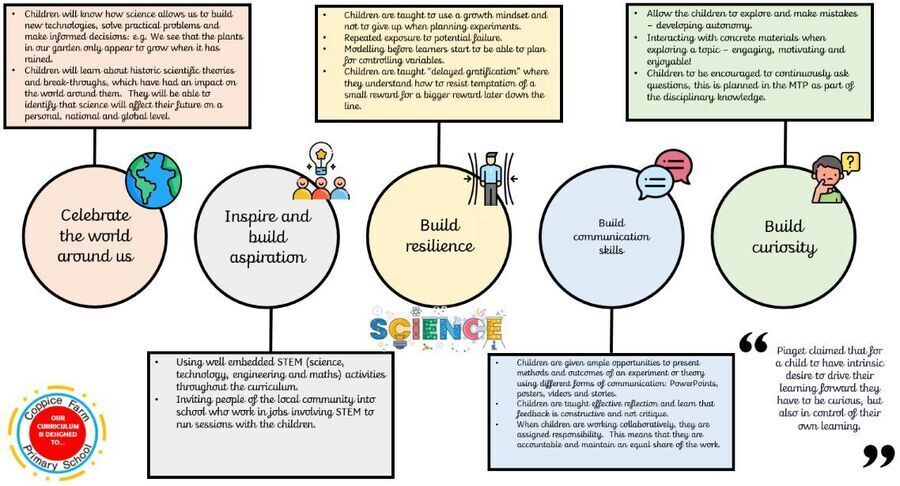
We intend for our science curriculum to build secure, long-term scientific knowledge through carefully sequenced concepts.
Knowledge is introduced in manageable steps with regular retrieval of key vocabulary and concepts. We review prior learning before introducing new content, use systematic questioning during investigations, and provide scaffolded support. This develops strength as scientific knowledge becomes secure, enabling children to understand how science has shaped our world.
We intend for our science curriculum to develop independent, motivated scientific thinkers.
We cultivate motivation through high expectations and opportunities for children to ask their own questions. Structured practice with scientific methods builds a greater understanding of disciplinary knowledge, freeing cognitive capacity for deeper reasoning and creativity. We foster resilience by teaching children that errors are valuable learning opportunities in science.
We intend for our science curriculum to foster unity through recognising diverse contributions to scientific knowledge.
Children encounter scientists from diverse backgrounds and time periods, understanding how breakthroughs emerge from global collaboration. We build empathy and awareness of our shared responsibility for our planet and future.
We intend for our science curriculum to be inclusive, ensuring all children can access practical investigation and excel.
Through positivity, we believe all children can think scientifically. Clear modelling, adaptive practice and regular checking for understanding ensure all children—including SEND and disadvantaged pupils—can participate fully in investigations.
Implementation
Since October 2023, our science lessons have undergone an exciting transformation. Structured into five dynamic sections, each lesson now begins with dual learning objectives, focusing on both knowledge acquisition and scientific methodology. Emphasising retention, we kick off with a retrieval exercise, tapping into prior knowledge. The main portion of the lesson features engaging activities or investigations. Following this, students tackle mastery-style questions to deepen understanding. Finally, children reflect on their scientific process, fostering a deeper understanding of scientific inquiry. Through this innovative approach, our young scientists are thriving and exploring the wonders of the world around them.
Disciplinary Knowledge
Substantive knowledge