Music

Music Lead: Mrs L Antcliffe
Music is a universal language that embodies one of the highest forms of creativity. At Coppice Farm, we believe the arts are such an important part of a child's growth and development, creating wonderful opportunities to explore their creativity. Making music is fun and provides a myriad of benefits to our brain, physical and mental health, and general well-being.

In September 2024, we were proud recognised for our curriculum and became a Music Mark School! The Music Mark Schools programme celebrates and supports schools who are committed to providing a high-quality music education.
INTENT
Music Curriculum Intent
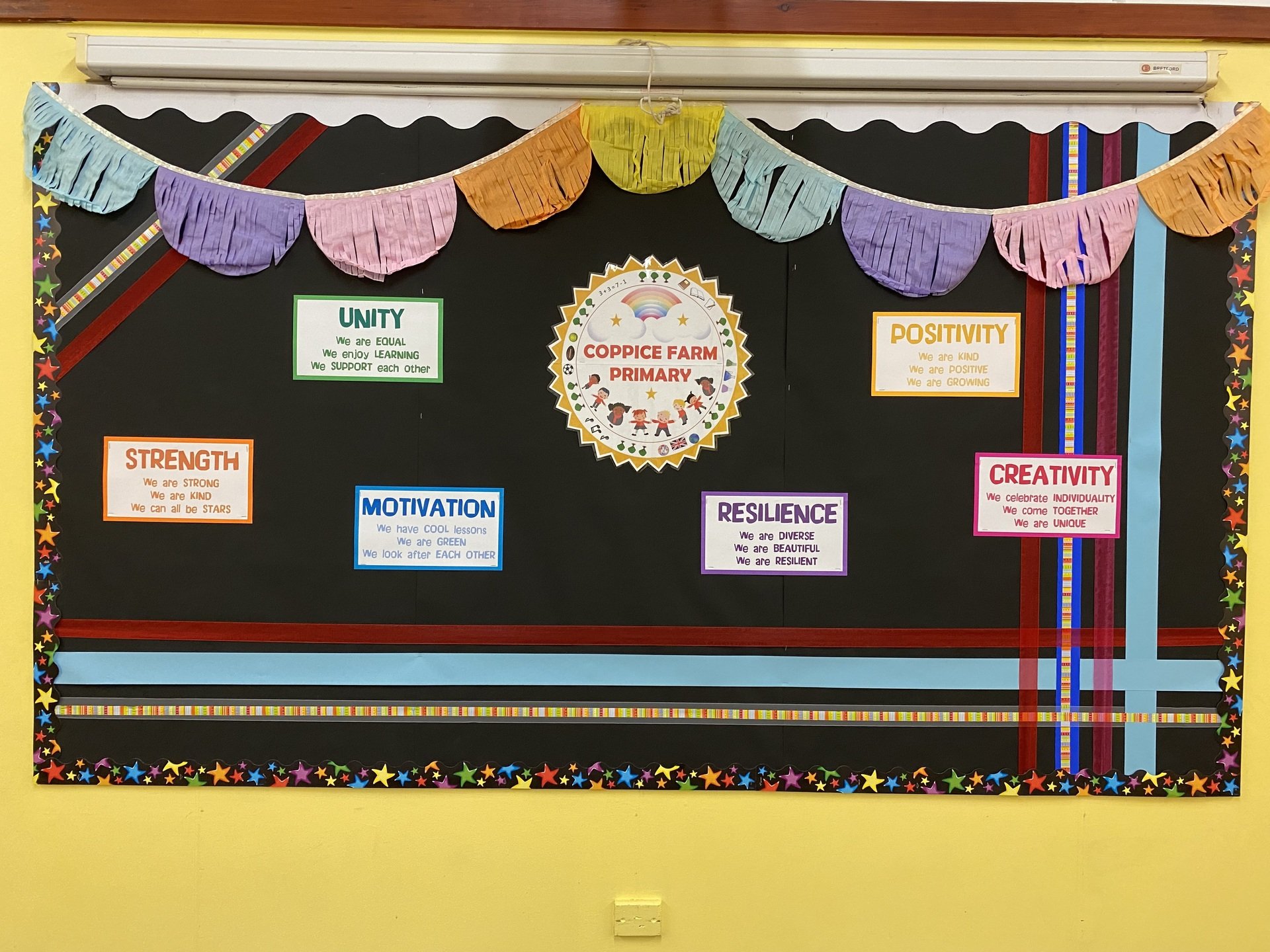
At Coppice Farm, the music curriculum is built around our core values of unity, strength, motivation, positivity, resilience and creativity. It is designed using the Charanga music scheme and Rosenshein’s evidence based pedagogical principles, ensuring that musical knowledge and skills are developed securely and meaningfully from Early Years to Year 6.
We intend for our music curriculum to build secure, long-term learning through carefully sequenced knowledge and skills.
Our curriculum is structured so that pupils revisit, strengthen, and deepen their musical understanding over time. We build unity through whole-class music-making. We develop strength by embedding core musical concepts—such as rhythm, pulse and pitch. Retrieval practice helps pupils make strong links with prior learning, supporting long-term memory and secure foundations for future musical development.
We intend for our music curriculum to develop independent, motivated learners.
We provide clear modelling, structured guidance, and scaffolded practice, gradually reducing support so pupils can apply skills independently. Engaging practical sessions build motivation, enabling pupils to recognise their progress and take pride in their achievements. We encourage creativity, enabling pupils to express themselves musically with increasing confidence.
We intend for our music curriculum to foster unity, cultural awareness, and respect for diversity.
Our curriculum exposes pupils to musical traditions, genres, and cultures from around the world. We teach pupils to show respect for diversity by approaching unfamiliar music with openness and empathy, recognising the role that music plays in different identities, cultures, and societies
We intend for music to be inclusive and ensure all children can access and excel.
We are committed to a fully inclusive music curriculum that ensures every child—regardless of background, ability, or experience—can participate, progress, and shine. Teaching is carefully modelled, scaffolded, and sequenced so all learners can access core knowledge and skills.
IMPLEMENTATION
All music lessons are delivered by our Music Lead, Mrs Antcliffe.
Our music curriculum ensures children sing, listen, play, perform and evaluate. This is embedded in the classroom through the structured music programme Charanga as well as weekly singing assemblies, various concerts and performances, choir and instrument teaching from specialist tutors. The elements of music are taught in the classroom lessons so that children are able to use some of the language of music to dissect it, and understand how it is made, played, appreciated and analysed.
In the classroom children learn key aspects of music through cross-curricular links. They also learn how to compose, focusing on different dimensions of music, which in turn feeds their understanding when listening, playing, or analysing music.
Each skill needs to be repeated and embedded in order to be achieved. Which is why all music lessons follows the same structure so skills can truly be embedded throughout school life.
IMPACT
Musical skills and understanding are built year on year, from singing nursery rhymes and action songs from memory in Early Years, progressing their skills and understanding in KS1 where the children also experience whole class instrumental tuition on the glockenspiel.
Further developing their skills and knowledge of the subject in lower KS2, the children access music more confidently, and continue to build the ability to read and follow a simple musical or graphical score. Throughout all of this the children’s enjoyment of music is a key element, running alongside the ‘taught’ musical skills and objectives.
Children’s work in music is assessed by making informal judgements as they are observed during lessons.
At the end of the year, a summary judgement of each pupil in relation to the skills the children have developed in-line with the National Curriculum these are reported to parents as part of the child’s annual school report.
| Name | |
|---|---|
| MMC Progression of Knowledge Skills and Elements Years 1-6.pdf | Download |